

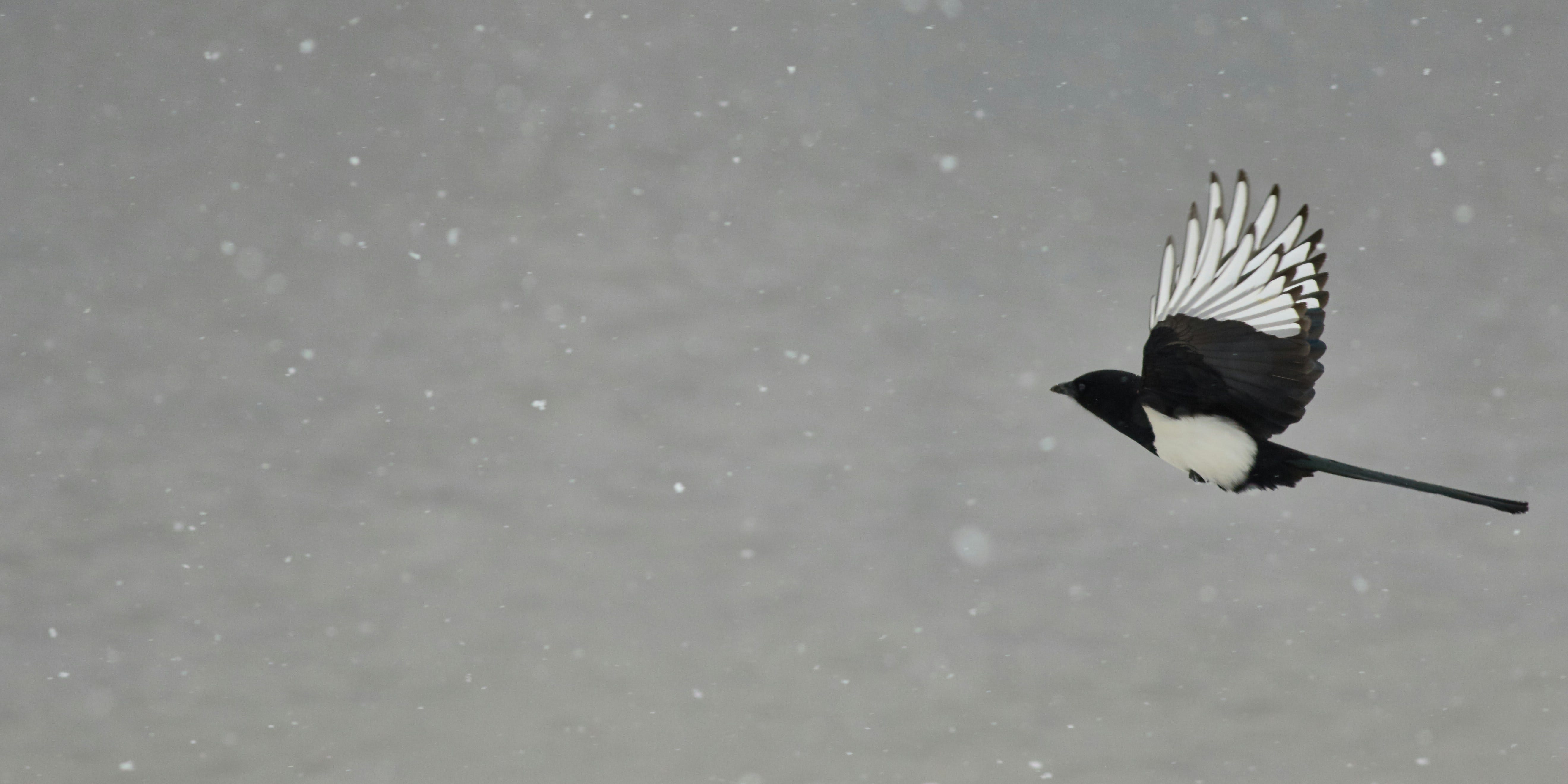
I, magpie

We wake early and go to an eastern bay. The world is bustling with life already, the sun high, the sky a pink-hemmed blue bursting with wing. Only the sea looks like it’s still sleeping: flat as the sky, soft breaths of tide.
I’ve just been to London, to speak about my book, and on the way there, caught in the commuter rush between Liverpool Street and Soho, I couldn’t help but think of ocean: the predictable to-ing and fro-ing of commuters, a tide twice a day—the flood in, the ebb out; a heft of human that contains its own gravity. And as with any strong sea current, it is a heft that carries you with it. Stepping out of the station and onto a bustling pavement, a tidal wave of commuters enveloping me, I wondered where I’d end up if I let the current take me. Whose offices I’d appear in, which cubicle I’d wash into like driftwood.
Anyway, this morning there is hardly a current in the bay. The tide is falling like a meditative breath—a long, slow exhale—and we swim out into the lung of it. In a thick wetsuit, the cold of the water doesn’t hit immediately, it hits only when I lower my face below the surface. An electric rush.
Below, the world is calm. And at first, as always, I see nothing. But this is not because there is nothing to see; it is because I am not yet looking in the right way. The eyes have to adjust to finding that which would not like to be seen, but more importantly, the mind has to adjust to paying the sort of careful and present attention that most things in life do not demand.
It takes a while before I am in the right place, before I am looking in the right way, and then I see them. A velvet swimming crab, violet and the size of my hand, in the weeds. Sensing me, it freezes and holds its pincers up to the sky. A flatfish resting on a barnacled rock, bulging eye examining the world. Hermit crabs, little legs poking out from beneath shells, slowly grazing along the seafloor. Jewel-red anemones wafting their tentacles while one gigantic pincer, bigger than my hand, tucks itself behind a stalk of kelp (I do not see who the pincer belongs to, although the creature, in hiding, definitely saw me).
It’s funny, because I did exactly this in the city. Although perhaps it is not so surprising: a wildlife-watcher is almost always a people-watcher, too. There was the man who sat next to me at the window bench in Pret, a rush of commuters rivering past the window, and he did not glance up, not at me and not outside, he just opened his laptop and ate his breakfast between bursts of frantic typing. He was on LinkedIn. He was wearing a very expensive-looking suit. His hand was trembling, just slightly. And on the tube, there was the woman who sat opposite me. My age and incredibly beautiful, she put on her makeup using her phone as a mirror, flawless winged eyeliner applied while the train clattered around (a talent if I ever did see one). And later that day, as my overground train crawled past another, I saw person after person after person on their phone, a hundred different expressions but every posture identical: hand up, neck bent, eyes down. Except from one young woman who was looking out the window, watching my train, watching the people within. For the briefest moment, our eyes met.
She was, I think, another magpie. The type of human who hungrily gathers morsels of detail wherever they happen to be (if, that is, they can get their eyes and their minds to attune to the world in the way that is needed; sometimes it is not possible, sometimes it feels like the hardest thing in the world).
I wondered where she was going. I wondered if her pockets would be full by the time she arrived.
By the time I came back north, my pockets were overflowing with magpied morsels.
I swim away from the shallows now, out to the kelp forest, and as I arrive the sun emerges. The canopy of kelp, shifting slowly with the tide, is dappled with golden light, long arms stretching and swirling, and revealing, every now and then, the forest’s understory: long, thick stalks emerging from a deep darkness. A fish or a crab occasionally swims into a slice of sunlight, showing itself for just a moment before hiding once more between shadow and shifting arms.
It is my favourite place to snorkel, this forest. Something about it—the shifting light, the swaying fronds, the creatures within, the way it stretches out and out into the deep indigo depths, disappearing there as if it knows no end to itself—is hypnotic, like a lullaby or a clear night sky.
But I find, as I drift here, that I am not alone. A morsel I magpied from my trip south has joined me: a man from the train north.
I had been alone in a carriage with him, a well-dressed middle-aged man with long stubble and slightly unkempt hair, and something about him (I could not say what) put me on alert. You know the kind, that belly-deep unease. When the train came to an unexplained stop, he started pacing up and down the aisle, muttering ‘for fuck’s sake, why have we stopped?’ under his breath, craning his neck to look out the window, stopping to say to me, angrily, ‘you’d think they’d tell us what’s happening.’ And then, when it started to rain and the drops were thumping against the windows, the man stopped his pacing and said, looking at my sandals (and with a bit of a smirk), ‘you’re going to get wet feet, love.’
When we eventually pulled into the station and disembarked, he walked by my side. I adjusted my pace, but he adjusted his too. Further up the platform, a teenage girl, about seventeen, tripped as she stepped off the train. She fell, hard, onto the platform, and then clutched her leg and let out a howl. A crowd of people gathered around her and as they did the man turned to me, sneering, and said, ‘ha, that’s before she’s even had a drink!’ I veered away from him at that point, towards the small crowd, and he watched me go but he did not follow.
And because I am a magpie, I tucked every detail of him, of that encounter, into my pockets. His expensive clothes, his stubble, his sneer and his laughter’s sharp edges, and the way that I knew, from the moment I saw him in the carriage, that he would be the sort of man to laugh at a woman (at anybody, but especially, I think, a woman) in pain. This is, I think, both a skill and a burden for the magpies of this world: we do not only collect the beautiful, we collect it all—the gems, the stones, the flesh, the bones, the meat and gristle and gold. And the hardest part, I think, is coming home with bursting pockets, unpacking our collected morsels and allowing the beauty to speak just as much, just as loudly, as the darker things we carried home.
What I mean is, magpies spend a long time thinking about their gathered hoards (we are, I think without exception, the ruminating type), and sometimes, often, the darkest things can be the hardest things to look away from.
It is an art to be a magpie who lets beauty sing just as loudly as the darker things. An art every magpie spends a lifetime learning, I think.
In a clearing in the middle of the kelp forest, a shoal of young fish wink in the sun. One hundred glittering bodies. And then, in perfect unison, they turn and are lost to the indigo deep. The crowd of strangers, gathered around the injured girl on the platform, do not disperse. They call for help. They support her as she tries to get up. A man picks up her suitcase, stands it upright.
Before you go, you might want to check out a brilliant tool created by Hannah Ritchie. It can be really hard to find out how much your country is contributing to deforestation via trade, because deforestation is measured in the country where it happens. But if the UK, for example, is buying coffee grown on deforested land abroad, then it is in some part responsible for that deforestation. Hannah has made an amazing interactive plot to help us understand how much our own countries are ‘importing’ deforestation. It is really worth taking a look here or reading her post here:

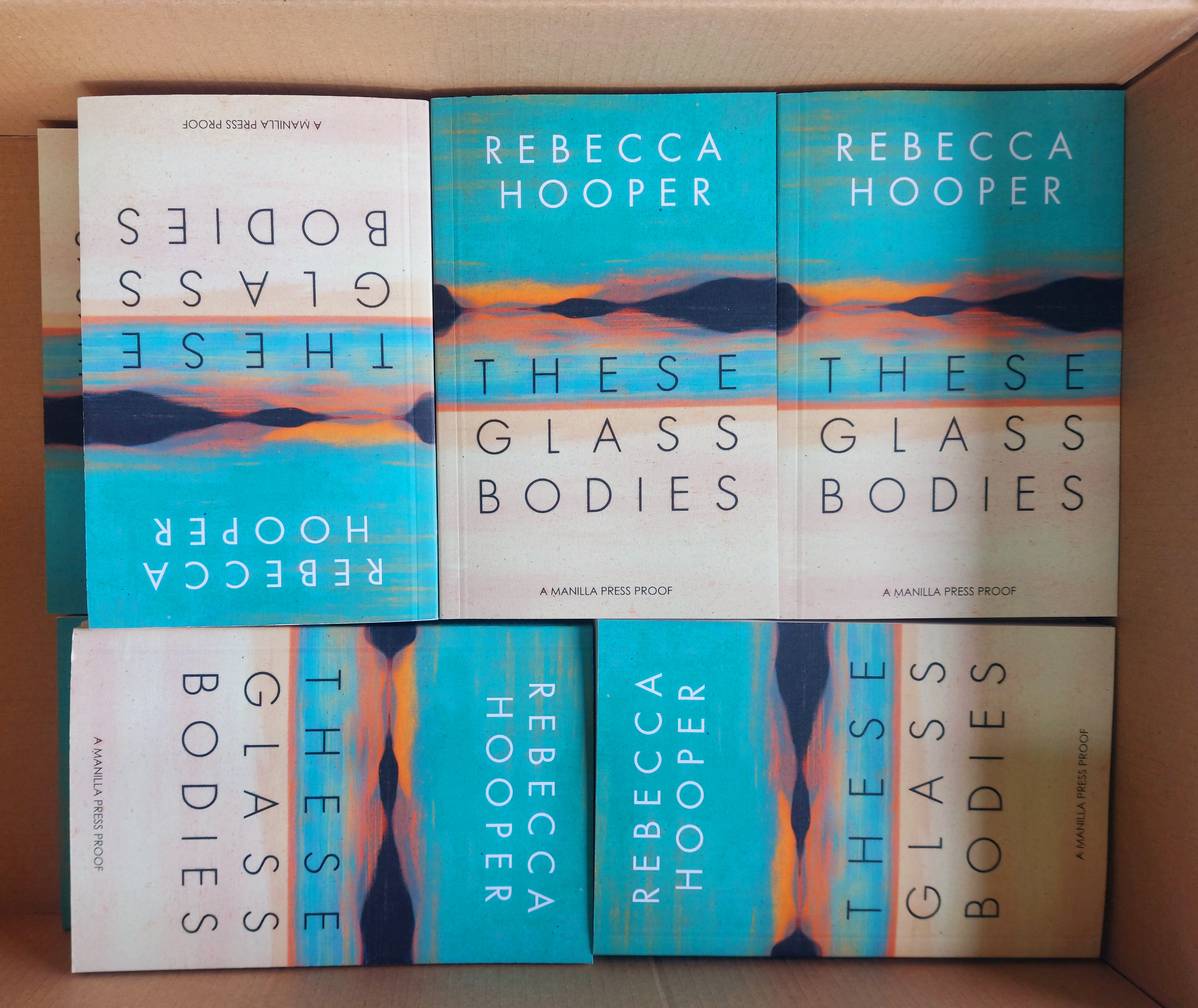
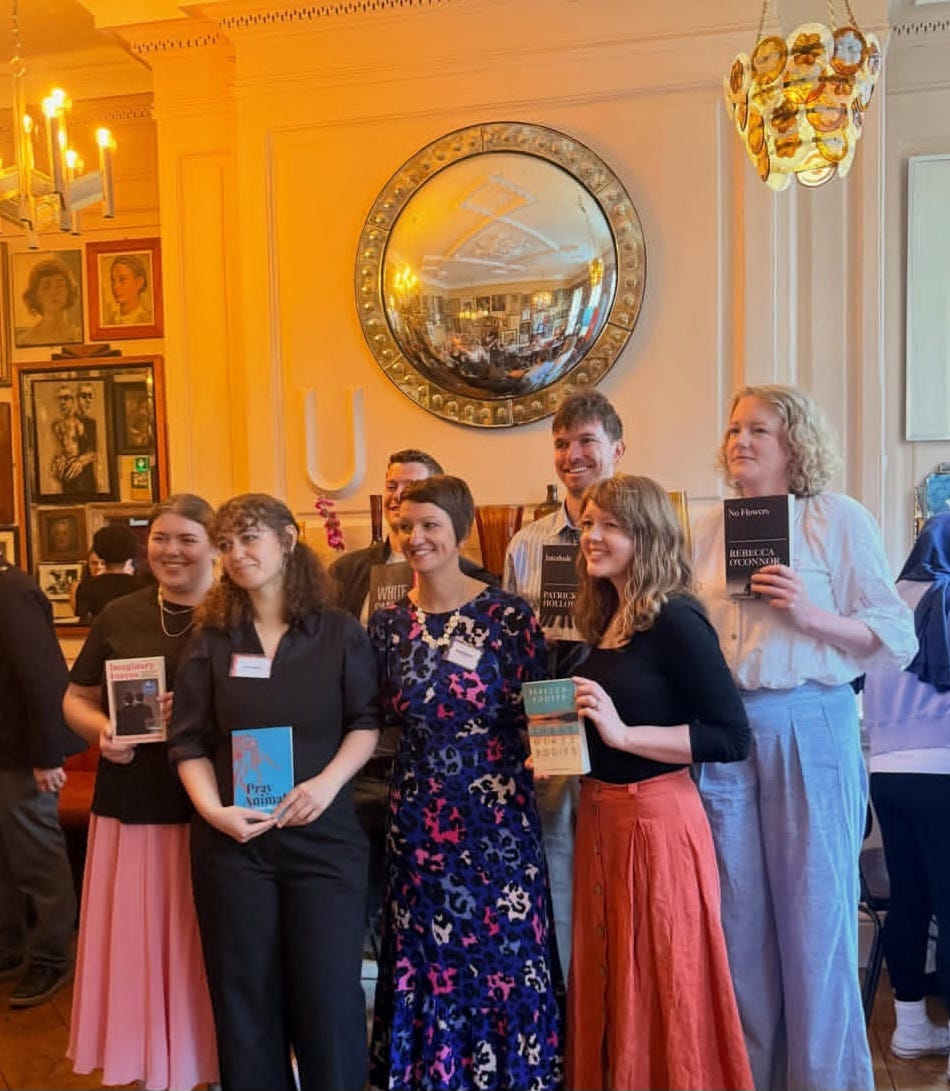
If you enjoy my work, you might like to pre-order my debut novel, These Glass Bodies. (Please note if ordering from outside the UK, pre-order options may be limited but will expand closer to publication).
‘An absorbing, unmissable and moving debut novel of love, disconnected people and our fragile relationship with the natural world’
You can also support my work by becoming a free or paid subscriber, or leaving a tip. All my posts are free, and paid subscribers (thank you!) allow me to keep it this way.
If you’d like to become a founding member, you’ll receive an original watercolour painting. Currently I’m working on sea-swimming selkie women, but the odd whale is springing into life, too.
This feels like one of my most favorite essays of yours. A wave of gorgeous, telling, revealing language:
"But this is not because there is nothing to see; it is because I am not vet looking in the right way. The eyes have to adjust to findinc that which would not like to be seen, but more importantly, the mind has to adjust to paying the sort of careful and present attention that most things in life do not demand."
"Magpied morsels," a carry them as well (but don't paint quite the picture you do) and those morsels we each bring with us, found on our daily walks are treasures and emotional, if not physical weight, as well as waking to now, and possibilities.
Love the braiding of these magpie moments. And the book looks wonderful.