

golden edges
when a ship wrecked in the north

We don’t know what happened, except that it did happen. The proof is in the name, the graves, the story. But there are many versions of the story. I will tell you one, and we can sit in the delicious half-light of what might be dawn and what might be dusk, knowing that the light—that soft, golden edge of the day—is as real as anything and everything else.
Westray, the most north-westerly Orkney isle, is engulfed by storm. It is 1730, or thereabouts, and the people of the island are hunkering down, folding themselves away, huddling around fires and listening to the rattling of windows, the hiss and thud of weather snarling around the house.
Outside, the sun has fled and the land, the sea, is lit in moonglow—everything husky grey, gunmetal blue. Except the sea; white-toothed, white-clawed. It is a wild beast tonight, arching its back as if in its death throes.
In a cottage in the north, a cottage surrounded by cliff and sea and storm, there is a woman spinning at the fireside. She hears something outside, beneath the howl of the weather. It sounds a little like footsteps, but must just be the wind demanding an audience. But then she hears it again, and tentatively she opens the door, sees her husband running towards her through the storm, hears him shouting: there is a ship on the rocks. Out to the west, there is a ship.
By the time they get to the clifftop, there is a gathering of wind-whipped people bent into right angles just to keep their feet on the ground. Some are crouching, some are kneeling. They are all looking down, down, down to the ship cracking in two against the rocks that cut and jut into the black water.
The sound of the storm fills every empty space, and so the heave and split of wood cannot be heard, only felt: a fracture within, a damp dread.
Every now and then, a person can be seen. Falling from the splitting ship. Clinging, swimming, swallowed up.
There is some discussion on the clifftop, shouted and screamed above the wind. Discussion of ropes to lower men down the cliff, of routes down to shore. But they all know, and have known since they first arrived, that there is nothing to be done. Not in this weather, not in these seas. No, there is nothing to be done but watch or leave.
A person will always wonder what it means to be one who stays, what it means to be one who goes—will carry the knot of their choice forever. Most leave, go back to their firesides, warm their hands and blink away their tears. Only a small group remains. They bear witness, they watch hands reach out of the water and then reach no more. But of course, nothing changes with the weight of their gaze. The ship is engulfed and the people are too, and the sea keeps on dancing, and the sky keeps on howling, and the moon, lighting the night up like a stage, does not so much as blink.
At first light, the clifftop is deserted. Everybody has gone home to warmth and food and bed and the dull ache of disaster. And so nobody is there when the sun rises above the tired sea—calmer now, an illusion of placidity. And nobody is walking the beaches, nor finding what is left on the sand as the moon pulls the lip of the water down and down and down.
But as the sun climbs higher in the sky, and the world warms, and the people wake, they do come. They come to the beach because while a shipwreck is awful, it is also a blessing. There will be wood, precious winter fuel in these bare-skinned isles, and there might be cargo, expensive goods, and nothing will be wasted because here, nothing is.
What the folk find as they walk the beaches is this: wood, and bodies. So much wood. So many bodies.
Except, one man finds something else.
He is at a distance from all the rest, and there, on the lonely sand, he finds a woman, blue-skinned, drowned, with a sodden shawl wrapped around her, and from that shawl comes a thin, high cry. And then: a small hand, dimpled knuckles, fingers reaching out to air, to sky.
The man kneels, unwraps the shawl. Finds a baby. Alive.
The child is rushed to the cottage, the one in the north surrounded by cliff and sea and calm blue sky, and inside the woman warms the baby by the fire, presses his blue-grey skin against her skin, watches him flush pink, feels his soft body come back to life. She whispers to him that everything will be okay, that they will take care of him, that he will live, and live well.
Later that day, an islander finds a fracture of wood washed ashore, a word etched into it. Archangel. The ship has come from Archangel, Russia.
When the news reaches the little cottage in the north, the baby is named Archie Angel.
When he is older, Archie falls in love with a local girl. They stay on the isle, marry, have a family. The Angels. When I go to Lady Kirk’s graveyard, I find the stone with their names etched into it, and while the surname no longer survives (lost when the last Angel married around one hundred years ago), Archie’s descendants can be found throughout Scotland. Descendants of a shipwrecked baby, taken in by a couple who raised him as their own.
I have been thinking of Archie lately. I have been reading about ICE, detention centres, children stolen from their homes and imprisoned, children on flimsy boats crossing the rough, cold waters of the Mediterranean, the English Channel, children who are told to go away, go back, get off our land when (if) they make landfall, children in Gaza whose homes have been bombed to the ground, whose limbs have been ripped from them, children who have been preyed upon by rich men with a lust for power, children who have not been taken in by this world, who have not been cradled at the fireside and pressed against warm skin, children who have been pushed, thrown, into stormy seas.
I have been thinking about how tempting it is to see all that suffering, all that struggle, all that horror, and want to give up, look away, find something easier to attend to than the thin cries of people in pain, because there is no way for any one person to make a dent in any of it.
But what Archie tells me, three hundred years after he was found on a beach just a short walk from my house, is that not everything can be saved or helped or fixed, but that does not mean that something can’t be. The night of the shipwreck, hundreds of people drowned. But one baby lived. And a couple took him in, and raised him, and he found love here, and he brought love here, and he found joy here, and he brought joy here, and there is so much struggle and pain in this world but there is also so much light—so many ways to find light, and to give it, too. Saving what we can save, helping where we can help, fixing what we can fix, doing what we can do—no more, no less.
That is all we can do, and that is enough. That is how we find the golden edges to our days, isn’t it?
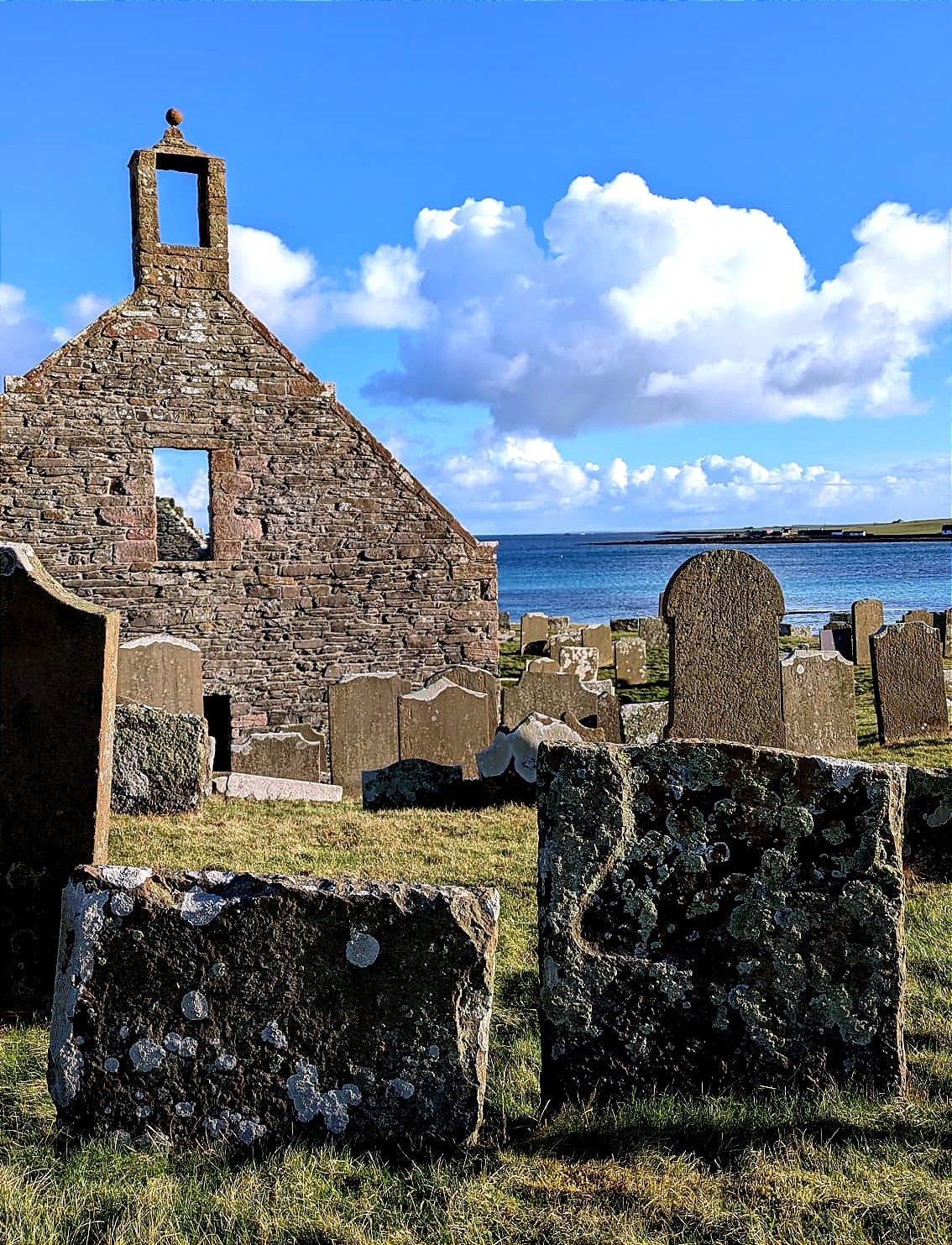
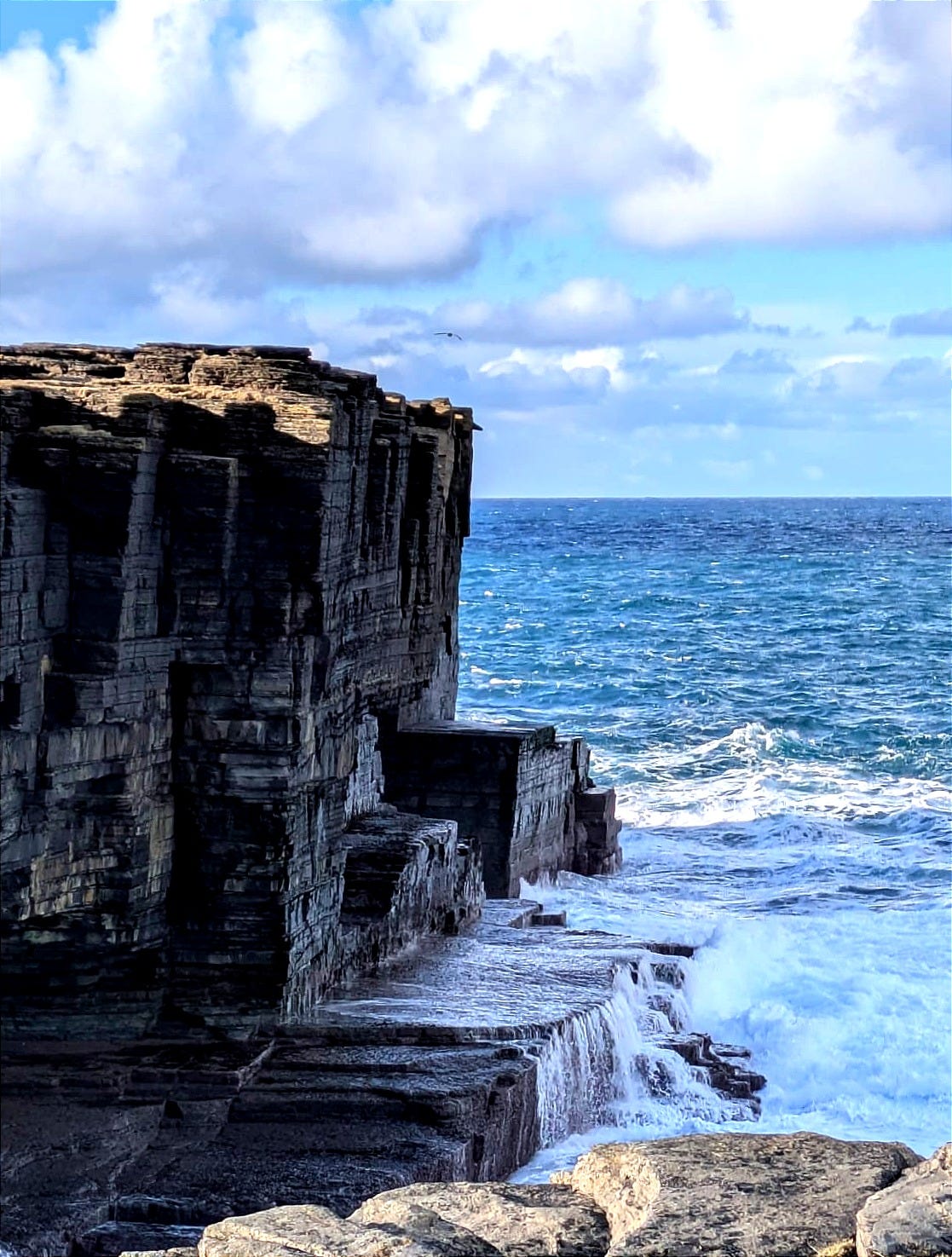
There are many variants of this story. I have heard five, and I’m sure there are more. But all of them agree on the shipwreck, the baby found on the shore (the only survivor), the couple who took him in and called him Archie Angel (after Archangel). And many of his descendants live today.
Of course, this retelling is my own embellished version. I have based it on the most commonly told variant of the story.
Some of you might be familiar with George Mackay Brown, an Orcadian poet. He wrote a poem about Archie Angel, called Wreck of the Archangel. Here’s an excerpt:
A man listens. This can’t be! — One thin cry
Between wavecrash and circling wolves of wind,
And there, in the lantern pool
A child’s face, a dwindling, in seaweed tassels

This is #5 of the Kindness Chronicles. You can read the previous four here (the story of a stranger who helped me when I fell down an arctic waterfall), here (where a homicide detective gave me a lift in the Canadian wilderness), here (five small stories of human kindness to nonhuman creatures), and here (about a neighbour on a plane).
If you find value in these weekly letters, would you consider a paid subscription, or leaving a tip? This allows me to keep writing, and helps to keep the publication free for all.
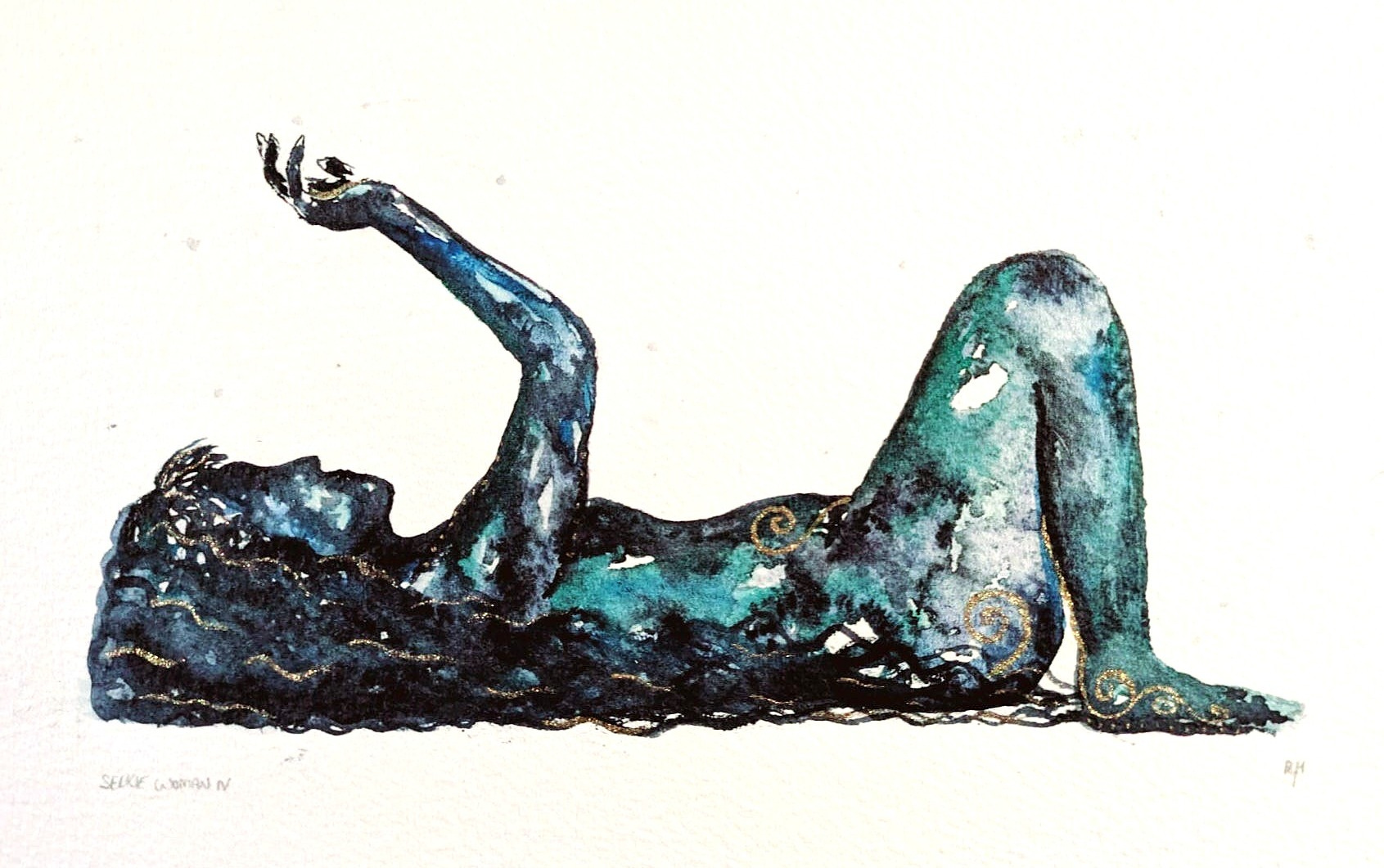
If you’d like to become a founding member of between two seas, and receive an original watercolour as a thank you, you can find this option by clicking subscribe/upgrade above.
Cover image of shipwreck by Thorvald Simeon Niss (1901)
Wonderful story. I read earlier in Renée Eli’s essay that hope belongs to the structure of reality. Hope isn’t a construct of human psychology; it’s the ground of being. This echoed in my ears as the man discovered the baby in all the devastation. You’re absolutely right — not everything can be saved or fixed but something can.
saving what we can, doing what we can -- I wrote about this in a different way today too -- and your story goes to the heart of it, to what Adrienne Rich says:
"My heart is moved by all I cannot save: so much has been destroyed. I have to cast my lot with those who age after age, perversely, with no extraordinary power, reconstitute the world."
From Dream of a Common Language (1978)